
There is no question that La Bola Negra (2026) is a cinematographic tour de force, weaving three time periods of Spanish history in a unique way: 1932 during the liberal Second Republic, 1937 during the bloody Civil War and 2017 in contemporary Spain. Directed by Javier Calvo and Javier Ambrossi—popularly known as Los Javis—it deals with powerful themes of homosexuality, violence, fear and love. The three protagonists who represent each time give strong performances: Carlos (newcomer Milo Quifes), Sebastián (well-known singer Guitarricadelafuente), and Alberto (Carlos González).
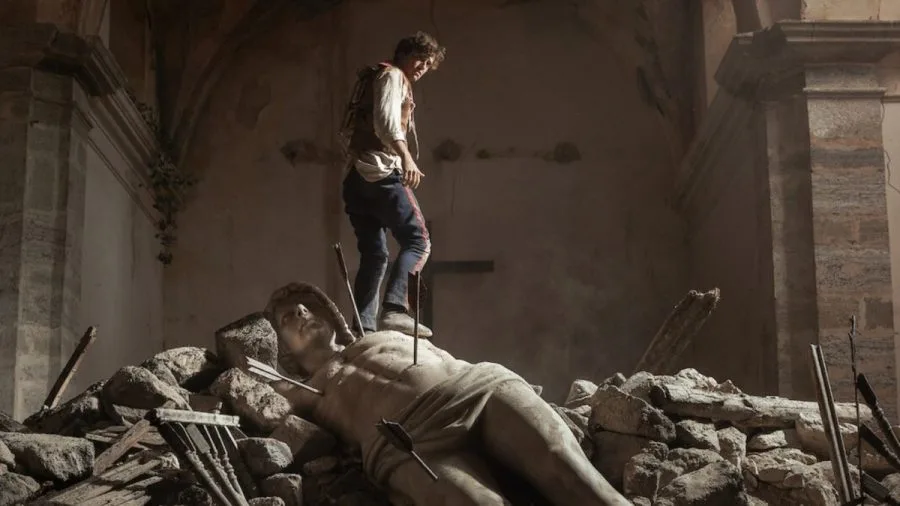 La Bola Negra begins with some typical scenes of Spanish Civil War films: a woman bathing a child in a wooden tub, representing the rural poverty of the times, an altar boy picking his nose, and even some donkeys “talking” with country folks. But it all changes when Sebastián, a Republican soldier, appears playing some patriotic songs with his trumpet. The iconic image of him climbing over the fallen statue of Saint Sebastian with the fatal arrows in his chest, preludes the tragic end of the soldiers.
Young Carlos is not a soldier, but a well-to-do young man who hides his homosexuality to be welcomed in the local Casino. His white suit symbolizes his innocence and his role as a martyr of the homophobic society. In contrast, the theme of homosexual love is repeated joyfully with the soldiers bathing naked in a stream under the hot sun or at night in the moonlight. Other quiet, tender, loving scenes between Sebastián and the prisoner (Miguel Bernardeu) are implicit of their true feelings.
Alberto, who is a young historian, portrays a contemporary gay man, charming, smart, funny, a prototype of a new Spanish man—he is not handsome, nor athletic, nor trim—but he is full of pathos and sensibility. It is him who discovers the secret about his own family and the Civil War soldier. I can’t tell anymore without giving a spoiler alert.
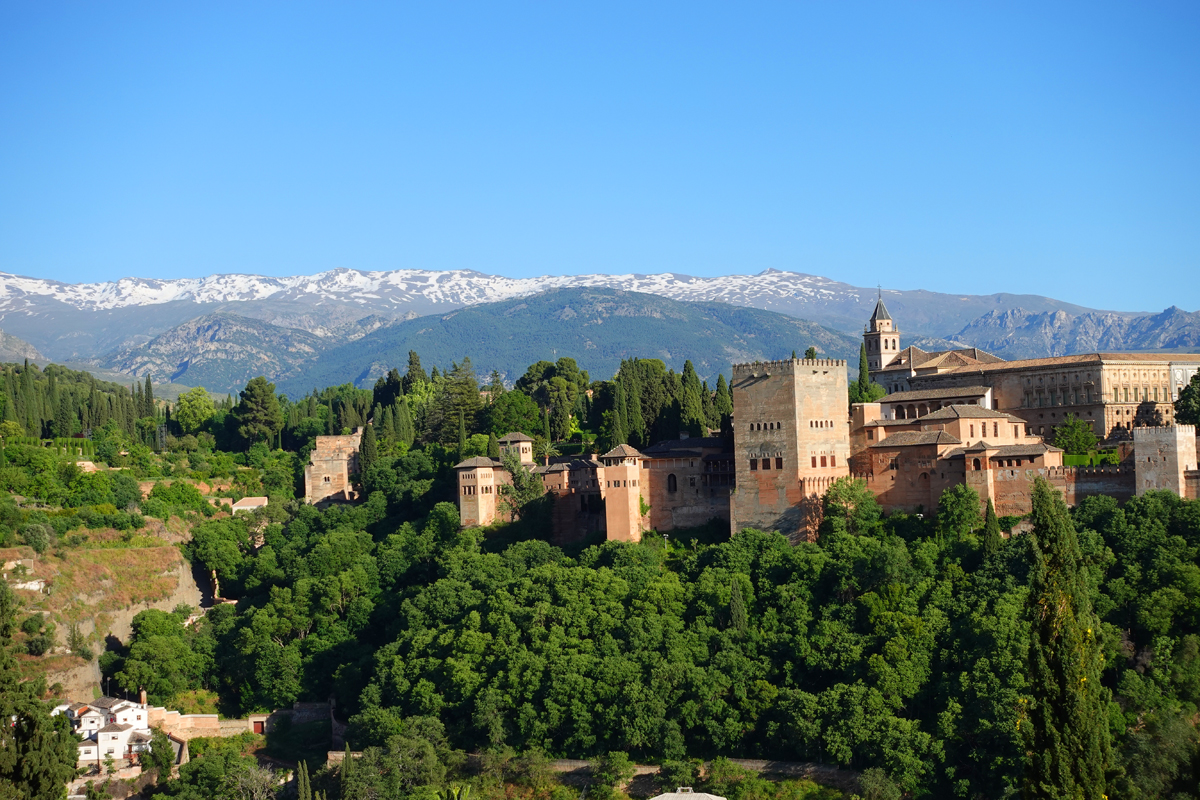 The symbolic scenes of the film are some of the most memorable ones. For example, the shooting of innocent prisoners at dawn are evocative of the death of the poet Federico García Lorca, who died in similar circumstances and his body still hasn’t been found ninety years later. Or the entire final sequence of Carlos lost on the snow of the Sierra Nevada Mountains, with Guitarricadelafuente singing his original theme song for the film. No, the rain in Spain doesn’t fall mainly on the plain, but it snows profusely in the mountains outside Granada, where Lorca was born and died.
Lorca (Alberto Cortés) makes a short, subdued appearance in La Bola Negra when he meets the man who inspired his Sonetos del amor oscuro (written between 1931-1936, but not published until 1983). Lorca’s life has been represented on the big and small screens many times before. Juan Antonio Bardem (Javier Bardem’s uncle) created a six episodes series (1987) and Marcos Zurinaga directed Muerte en Granada (1996) with Andy García as the protagonist. More recent are Little Ashes (2008) by Paul Morrison that portrays the relationship among Dalí, Lorca and Buñuel while the three of them lived at the Residencia de Estudiantes—I took the photo included here at an exhibit this past summer in said place—and the series El Ministerio del tiempo (2015-2020). 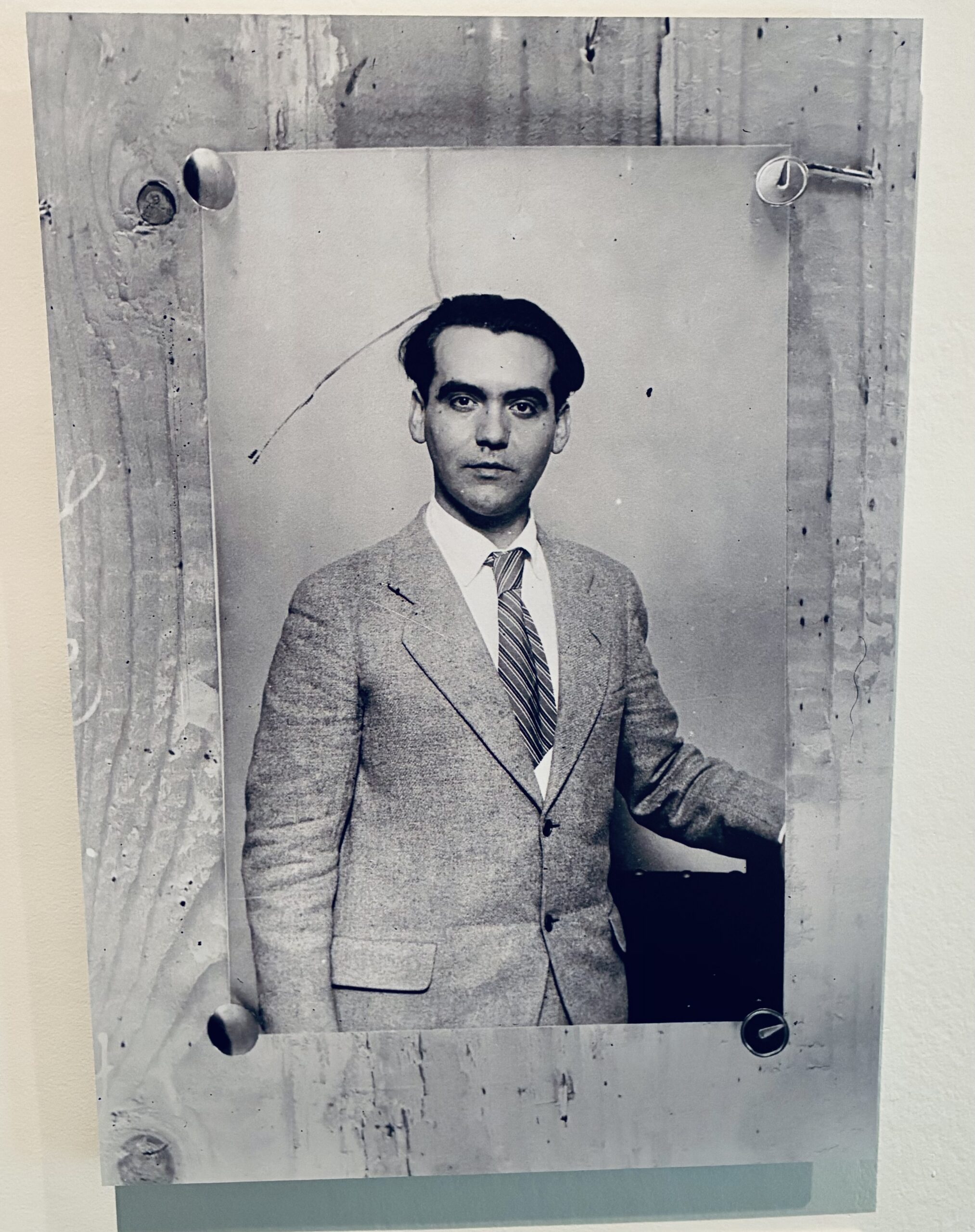 Just released in Spain, is also the documentary La voz quebrada (The Broken Voice). I should add that Franco’s government censured publications of Lorca’s work and performances of his plays until 1953.
The role of women in La Bola Negra is uneven and it merits some comments. In my opinion, Alberto’s mother played by one of Almódovar’s darlings, the award-winning Lola Dueñas, is too exaggerated, as if this serious film needed some comic relief. Glenn Close is similarly portrayed as the American scholar, with a terrible Spanish accent, who discovers La bola negra, the unfinished manuscript by García Lorca. Penélope Cruz, however, plays with gusto a spirited cabaret dancer who sings for the troops. Another of Almódovar’s favorites, Cruz knows how to entertain in any role.
As my readers know, my father fought in the Spanish Civil War against Franco’s forces. From the Southern Front, he wrote an almost daily letter to my mother, who was waiting his return in Valencia to get married. I was fortunate to find these more than 800 letters between them and I wrote two books to analyze them: My Mother, That Stranger. Letters from the Spanish Civil War (2019) and Retrato del joven escritor Juan Luis Alborg. Epistolario durante la Guerra Civil (2023). Theirs was one of the many love stories shaped by this historical time. I wonder if my parents would be as delighted as I am to see that love in its diverse forms exists in the hearts and minds of today’s Spanish filmmakers.