
My father had this mysterious malady. We knew it as “el pinchazo” (another one of those untranslatable Spanish words), a very sharp pain on his chest—the right side I think, but I’m not sure. It would appear after a ride home from the university on his scooter in the rain. Or he would wake up with it on a cold morning in Madrid.
When he had “el pinchazo” the entire house felt sick and quiet. My brother and I did our homework in the family room without arguing and my mother didn’t go to Aunt Elena’s house as she liked to do for afternoon tea together. I wonder if my father had gone to our doctor, Don Jesús, to have it checked out or if he ever had an x-ray. I think he took a couple of Bayer aspirins and he laid down in bed with a heating pad and the blinds closed down. “El pinchazo” could last an entire day, twenty-four hours of worry and silence. If a friend of his called, a rare occurrence anyway, my mother would take the call and say: “Juan has ‘el pinchazo,’” that’s all it was needed, our friends and relatives knew that there was nothing else to say or do until it ended.
When my father felt better, the bedroom blinds would go up, letting the light in. But if my mother opened the windows to air the room—something she loved to do—my father would shout: “Don’t do that, Chatita (his endearing name for her), or do you want me to get “el pinchazo” again?”
Then, it was the time to offer our suggestions about the mean malady. My mother thought he should wear a thicker vest or a sweater under his suit jacket: “Chatita (it means little pugged nose), don’t start with your nonsense.” 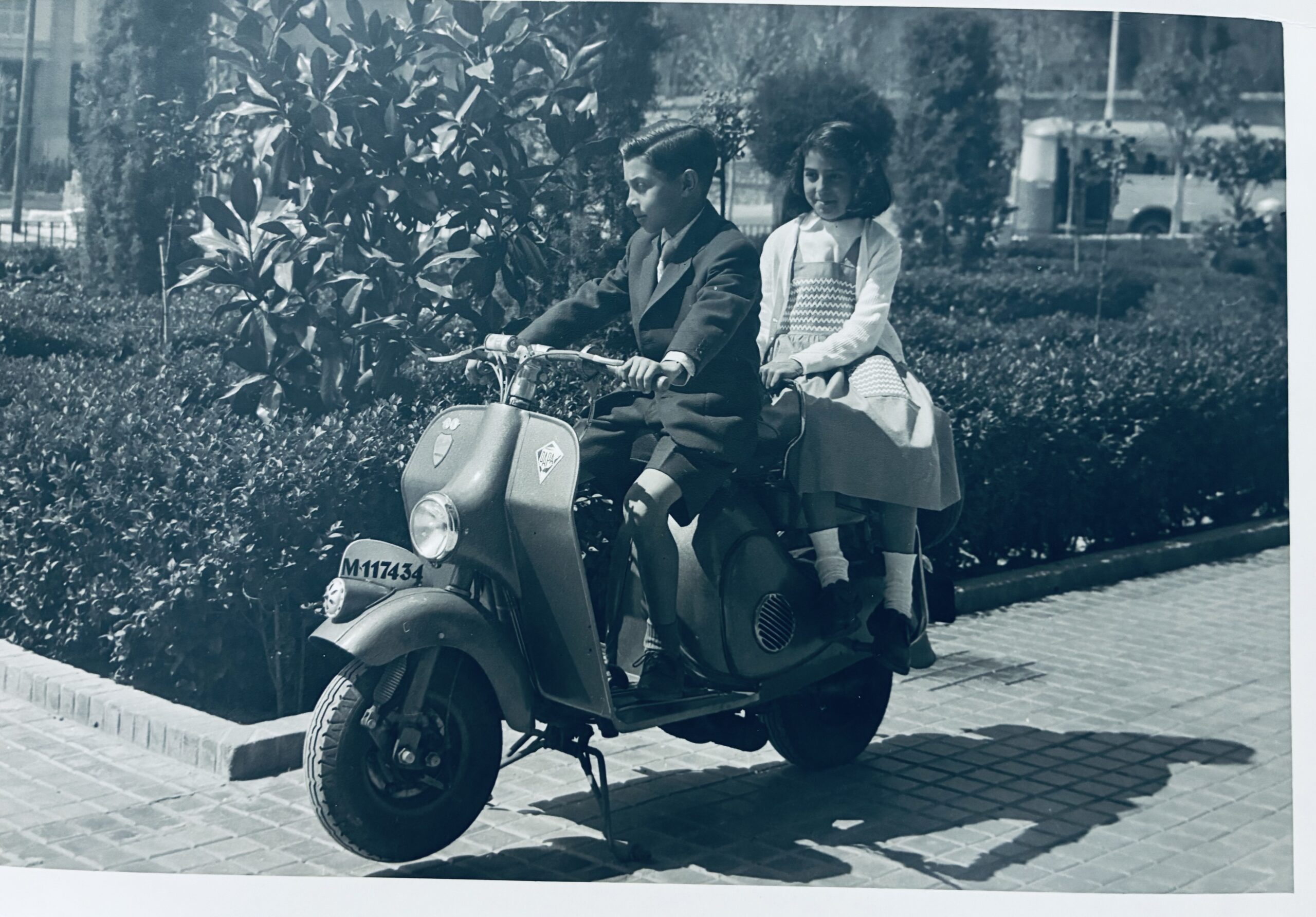 My brother blamed the scooter, why couldn’t we have a car like some of our neighbors? The maid recommended that next time he should use Vicks VapoRub and take a slug of cognac before going to bed like men in her hometown did and they always woke up healthy. I wonder what I suggested. Probably, I kept my mouth shut, afraid to be called “dumb girl.” Now I have a theory.
My grandmother on my father’s side, Agustina, died shortly after childbirth. I’m supposed to look like her and I was almost named after her. My grandfather remarried only to die soon when my father was a young boy, leaving him an orphan for the rest of his life. Despite having a loving step-mother—according to some relatives—but not my dad who always described himself as an orphan, like I said. But this is a matter for another post. I am being a detective now.
Many years later, when I was writing about my parents’ letters during the Spanish Civil War, I discovered that both of my paternal grandparents died of tuberculosis. Something that for some strange reason, I never knew and we didn’t talk about. I remember seeing the large sanatoriums in the mountains outside Madrid on our way to our summer place in El Escorial years later. My father lectured us about Thomas Mann and his famous novel, The Magic Mountain, but didn’t tell us about the family secret. Now, I realize that my father feared that he had TB like his parents every time he had “el pinchazo.” He probably didn’t tell Don Jesús because he felt that was something to be ashamed of.
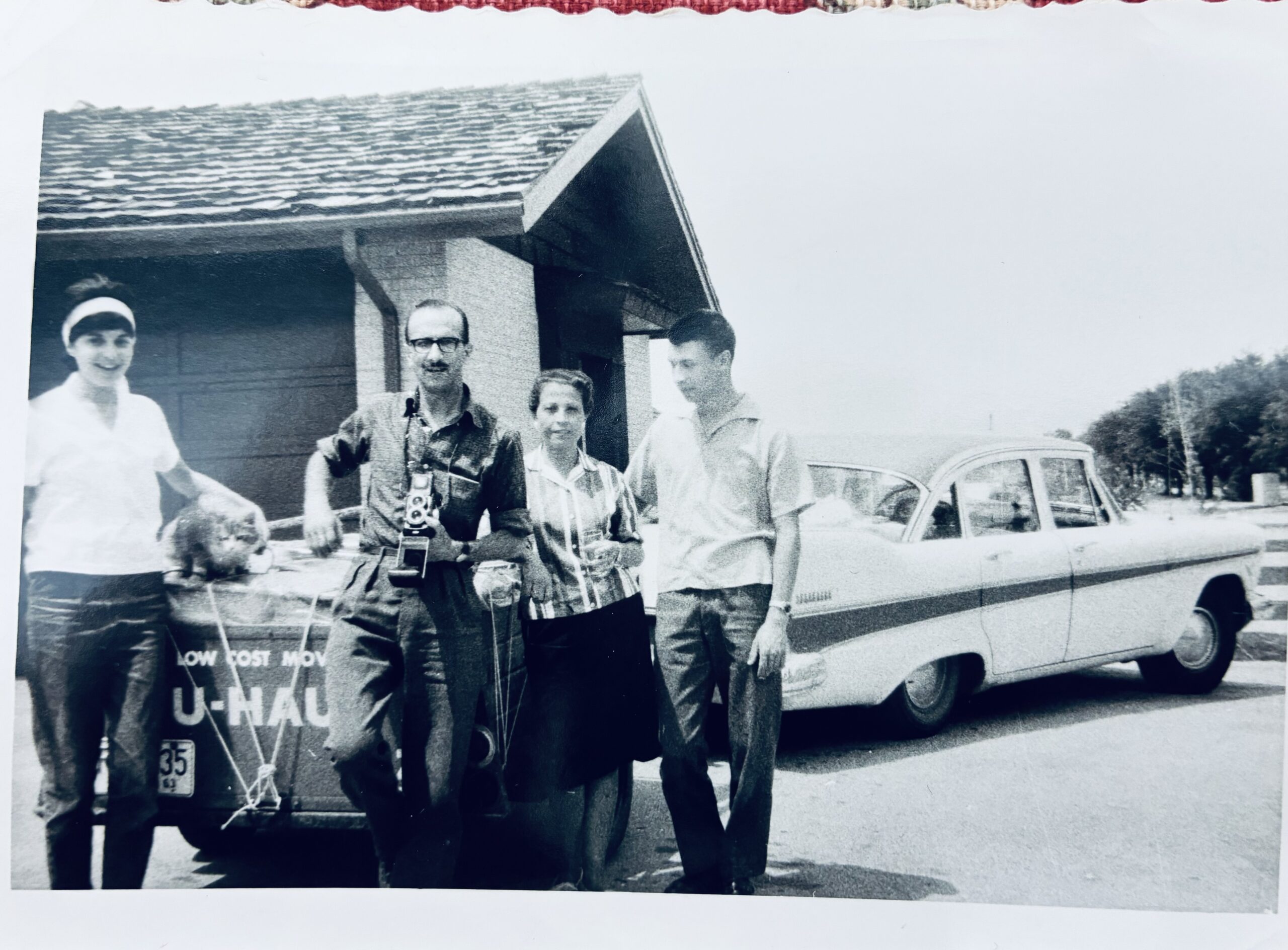 I don’t believe that my dad ever had one of these episodes in the States. Maybe my brother was right all along, since one of the first things we did when we arrived, was purchase a white 1958 Plymouth Fury, with huge fins and red stripes. See it with the entire family plus our cat by my side, towing a U-Haul across country.
I don’t remember my dad ever spending a day in the hospital before dying of appendicitis at 95 years of age, he didn’t make it through the operation. Otherwise, he would have become a centenarian like his grandfather, who lived to be 102.
Hola, tu padre siempre fue un personaje! Pinchazo!!
Y tu, de donde saliste tan alta? Me encantan las ilustraciones de tus escritos. Habia olvidado que tuviste gato de pequena.
XX
Gracias, Cristina. Dicen que mi abuela paterna era alta y me parezco a ella. La foto de su boda está en la página 161 del libro sobre mi padre y yo sí que lo veo. La pobre no llegó a tener el pelo blanco…
Besos, Concha
Love the post and the photos!
Thanks, Randi. I have so much fun going through the photos and writing the posts for good friends like you! Concha
Concha,
I thoroughly enjoyed your mysterious malady story, a quintessential Concha tale. An hour earlier I had been re-reading Tomorrow in the Battle Think on Me (Javier Marías), and your story seemed to flow from that, in its rhythm and digressions. Maybe Marías and you share a Madrileño voice in written English? I am hopelessly enthralled by his writing.
Susan
Dear Susan,
I feel so honored to be compared to Javier Marías! He is one of my favorites too. I never want his novels to end when I’m reading him. My father and his father Julián were friends, but I only met Javier once online during Covid times. They compared us too, because we both had famous fathers… funny.
Thanks so much for reading my blog, Concha
I found this story well told and rather amusing ( not that your father had pain but how everyone reacted and how it disappeared). Rebecca
Glad you enjoyed the post, Concha
Me encanta leer tus recuerdos. Y ver las fotos
Un abrazo
Inés
Mil gracias, Inés.
Abrazos, Concha